


If you are looking to transform your bedroom into a sanctuary of pure calm, balance, and warmth, there is one design movement that stands above the rest: Japandi. This beautiful hybrid style merges the modern functional elegance of Scandinavian design (hygge) with the rustic.Timeless warmth of Japanese minimalism (wabi-sabi). The result is a space that feels deeply intentional, organic, and incredibly soothing.
At the absolute heart of any Japandi bedroom is the bed. Since this style relies heavily on tactile warmth rather than bold decor, your choice of bedding, fabrics, and textures will define the entire room. Here is your ultimate guide to styling a Japandi bedroom using natural materials, earthy tones, and mindful design choices.
1. Embrace the Beauty of Imperfection with Natural Fabrics
Japandi philosophy is deeply rooted in wabi-sabi—the Japanese art of finding beauty in imperfection, transience, and natural aging. In a bedroom, this means stepping away from stiff, heavily ironed, synthetic sheets and embracing organic, breathable, textured fabrics.
The perfect Japandi bed looks inviting, relaxed, and lived-in. To achieve this, look for premium, high-quality natural fibres:
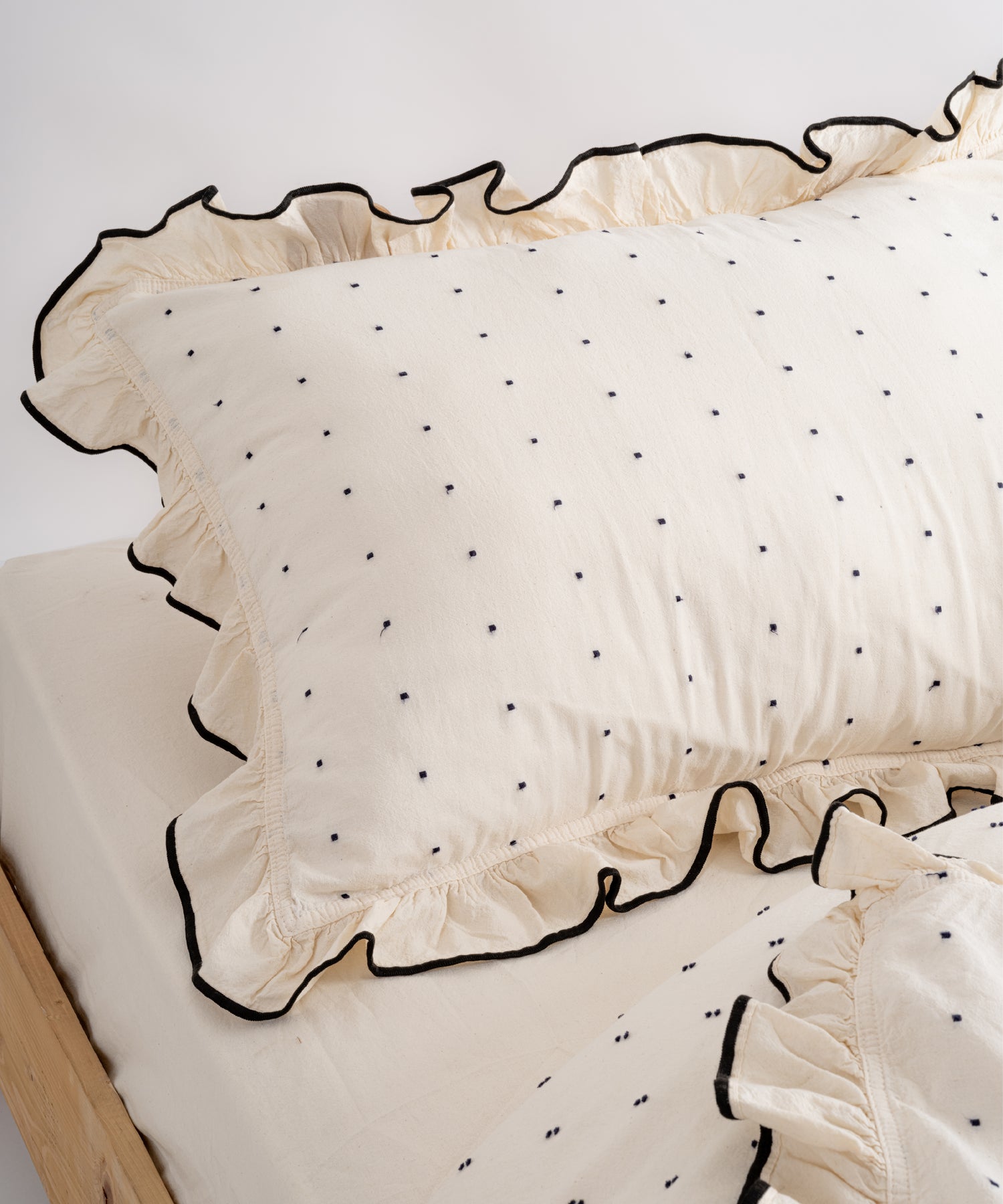
- Garment-Washed Cotton: Choosing fabrics that undergo a specialized pre-washing process relaxes the cotton fibres. This results in an exceptionally soft, matte, and naturally crinkled texture that looks sophisticated without ever needing an iron.
- Breathable Weaves: Opt for an optimal thread density—such as a durable 160 TC (Thread Count) woven with lightweight 30/30 yarn counts. This allows maximum air circulation while providing a comforting, cloud-like drape.
💡 Curious about how textile construction affects comfort? Read our expert article on what is yarn twist and why it matters for quality bedding to understand the science of a great night's sleep.
2. Stick to an Earthy, Organic Colour Palette
A true Japandi space relies on a muted, nature-inspired palette to soothe the eyes and quiet the mind. Instead of stark, cold whites, build your bed’s colour scheme using warm, organic tones:
| Japandi Colour Group | Ideal Tones | Why It Works |
|---|---|---|
| The Neutral Base | Natural Cream, Off-White, Soft Oatmeal, Warm Sand | Replaces harsh white with warm undertones that mimic unbleached cotton and raw linen. |
| The Earthy Accents | Olive, Forest Green, Slate Grey, Ochre, Terracotta | Brings the grounding elements of forests, stone, and clay indoors. |
| The Minimalist Contrast | Charcoal, Soft Black, Dark Espresso Wood tones | Adds subtle structural definition to prevent the room from looking washed out. |
When choosing patterns, less is always more. Instead of busy floral prints, choose plain textured bedding, or opt for very fine, traditional yarn-dyed stripes. For example, a natural cream base decorated with delicate forest green or charcoal dotted stripes perfectly captures this organic, minimalist aesthetic.
3. Layer with Intention (and Avoid Clutter)
Scandinavian design is famous for its layering of blankets and sheepskins to create warmth (hygge). However, Japanese minimalism warns against visual clutter. How do you find the balance in a Japandi bedroom?
The secret is intentional layering. Instead of piling up ten decorative pillows that you have to throw on the floor every night, simplify your layout:
- The Foundation: Start with a high-quality, breathable fitted sheet in a coordinating natural tone (such as powdery pinks, sage, or soft tan).
- The Main Duvet: Use a premium, breathable duvet cover set made from garment-washed cotton. Let its natural, relaxed folds drape softly over the sides of the bed.
- The Pillow Setup: Stick to four pillows max. Use two standard sleeping pillows and two slightly structured accent pillows. Standard envelope closures keep the look clean and uncluttered.
- The Grounding Throw: Drape a single, lightweight waffle-knit cotton throw blanket or an organic muslin bedspread across the foot of the bed for texture.
4. Focus on Sustainable and Eco-Friendly Quality
Both Japanese and Scandinavian cultures share a deep respect for nature. Therefore, a genuine Japandi bedroom cannot be built on disposable, synthetic fast-homeware. The focus must be on sustainability, longevity, and purity.
Invest in bedding that carries verified eco-friendly credentials, such as the OEKO-TEX® Standard 100 certification, which guarantees the fabric is free from harmful chemicals. By choosing planet-friendly production processes like garment washing, you also support lower water and energy consumption during manufacturing.
🍃 To learn more about how sustainable textile production directly benefits your home and the planet, check out our guide on what is garment-washed cotton and why it is an eco-friendly choice.
5. Care for Your Bedding Gently to Let It Age Beautifully
The wabi-sabi element of Japandi means appreciating how things soften and settle over time. Premium cotton bedding actually gets softer, more comfortable, and more visually rich with every wash, provided you care for it gently.
Avoid harsh chemical softeners or bleach, wash at low temperatures (30°C–40°C), and let your bedding line dry in the breeze or tumble dry on a low setting. The subtle, organic creasing of the fabric is the ultimate luxury—celebrate it!
🧼 Want to make sure your investment lasts a lifetime? Read our practical care guide on how to keep your cotton bedding looking brand new for years.
Bring Calm Home
Styling a Japandi bedroom is not about strict rules; it is about editing out the noise so you can appreciate the essential. By choosing a thoughtful palette of cream, sand, and earthy greens, selecting premium, technical 100% natural cotton weaves, and embracing relaxed, iron-free textures. you can create a quiet sanctuary that welcomes you home every single night.


